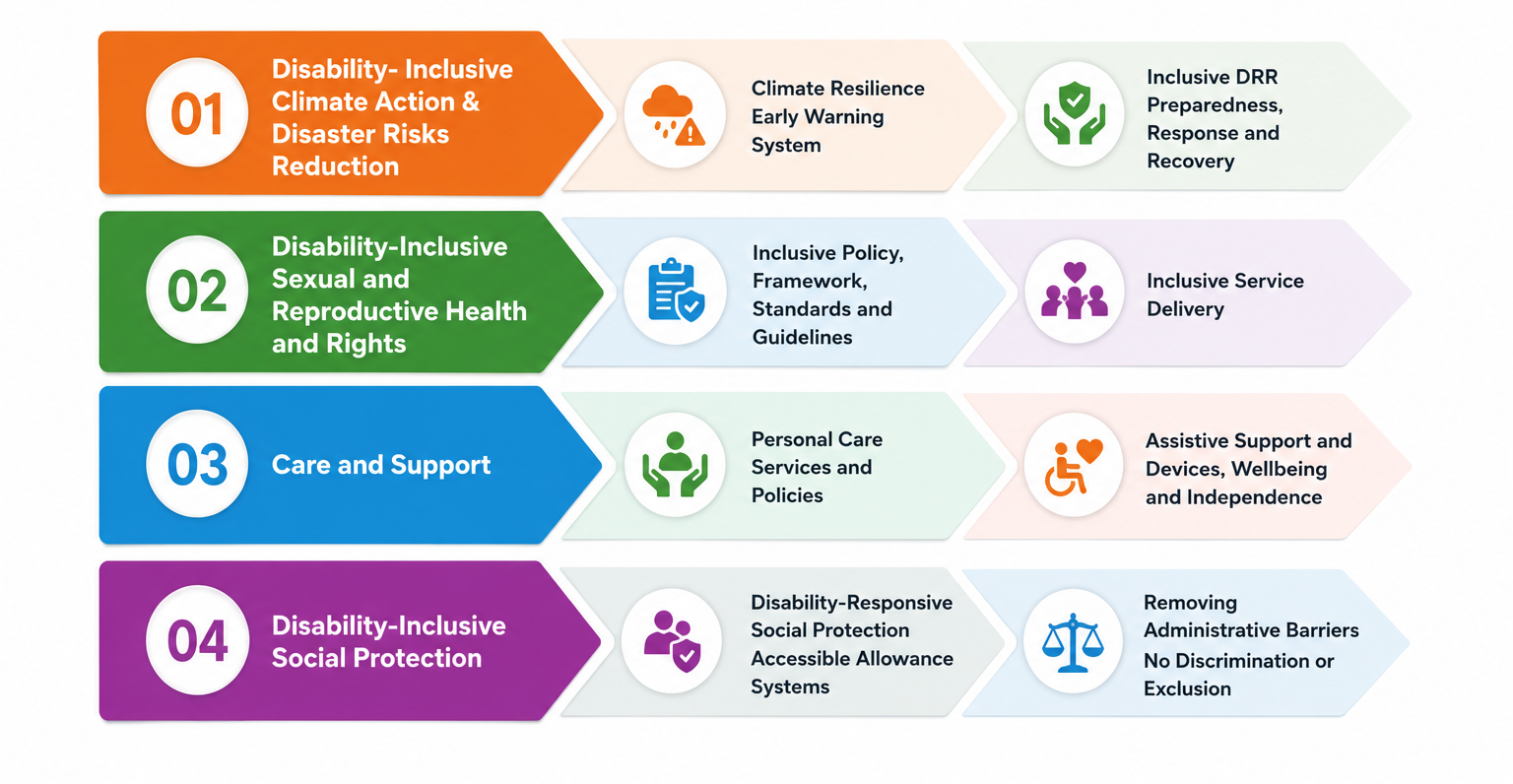
Strategic Pillars
Intersectional Movement Building and Social Norm Change
Goal: Challenge discrimination and build solidarity across movements.
Year 1
- Map potential allies and movements (women’s rights, disability rights, Dalit rights, youth movements).
- Launch community dialogues and awareness campaigns addressing casteism, ableism, and patriarchy.
- Develop media content highlighting intersectional experiences (stories, short films, social media campaigns).
- Train activists on inclusive communication and advocacy.
Year 2
- Facilitate multi-movement roundtables and collaborative advocacy initiatives.
- Launch national awareness campaigns around key dates (e.g., International Day of Persons with Disabilities).
- Encourage joint research projects to highlight intersectional issues.
- Empower community champions to lead localized social norm change efforts
Year 3
- Scale up intersectional campaigns with wider media coverage.
- Document and share evidence of social attitude shifts.
- Create a permanent coalition of organizations advocating for intersectional inclusion.
- Advocate for institutional adoption of inclusive and intersectional approaches in government and civil society.
Transformative Leadership and Empowerment of Dalits with Disabilities
Goal: Build empowered leaders, particularly women and girls, with lived experience of caste and disability-based discrimination.
Year 1
- Identify and map potential Dalit youth leaders with disabilities at local and provincial levels.
- Conduct foundational leadership development workshops (skills, self-advocacy, confidence building).
- Launch mentorship programs pairing emerging leaders with established activists.
- Facilitate access to educational scholarships and literacy programs.
Year 2
- Advanced leadership training focusing on strategic planning, negotiation, and public speaking.
- Facilitate participation of young leaders in national-level forums and networks.
- Initiate community-based projects led by youth and women leaders to practice civic engagement.
- Support peer-led awareness sessions in schools/colleges to promote leadership and rights awareness.
Year 3
- Establish a formal youth and women leadership council within DDAN.
- Document and disseminate leadership success stories and best practices.
- Facilitate cross-movement leadership exchange programs (national and regional).
- Integrate leadership graduates into policy and advocacy initiatives as active change agents.
Rights Advocacy and Legal Empowerment
Goal: Dismantle discriminatory policies and practices; promote justice and legal literacy.
Year 1
- Conduct baseline assessment of legal gaps and challenges faced by Dalits with disabilities.
- Develop and distribute legal literacy materials (accessible formats: braille, audio, simplified Nepali).
- Initiate small-scale strategic advocacy campaigns on priority issues.
- Build partnerships with legal aid providers and pro-bono lawyers.
Year 2
- Engage in policy dialogues and advocacy with government ministries for inclusive laws.
- Launch pilot legal empowerment programs in selected communities.
- Support strategic litigation cases addressing systemic discrimination.
- Train community paralegals and rights defenders from Dalit with disabilities communities.
Year 3
- Scale legal literacy and empowerment programs nationwide.
- Establish a national-level legal advocacy forum focused on Dalits with disabilities.
- Monitor policy reforms and track progress on rights implementation.
- Document and disseminate advocacy impact stories to influence public opinion and policy.
Inclusive Development and Socioeconomic
Goal: Ensure equitable access to education, employment, healthcare, and social protection.
Year 1
- Map existing barriers to inclusive services for Dalits with disabilities.
- Initiate pilot programs for inclusive education and vocational training.
- Partner with local governments to ensure social protection benefits reach target groups.
- Conduct awareness sessions for service providers on accessibility and inclusion.
Year 2
- Expand inclusive education and vocational programs in multiple districts.
- Advocate for inclusive employment policies with private and public sectors.
- Conduct community health campaigns emphasizing disability-sensitive services.
- Promote accessible financial inclusion (microcredit, grants) for Dalits with disabilities.
Year 3
- Co-create scalable models of inclusive development with local governments.
- Institutionalize monitoring mechanisms to ensure equitable service delivery.
- Document case studies of socioeconomic impact for replication.
- Host national-level forums on inclusive development best practices.
Institutional Strengthening and Sustainability
Goal: Strengthen DDAN’s internal capacity, governance, funding, and learning systems.
Year 1
- Conduct organizational capacity assessment and develop a strategic strengthening plan.
- Implement governance and HR reforms to ensure transparency and accountability.
- Develop fundraising strategy and initiate donor engagement.
- Establish basic monitoring, evaluation, and learning (MEL) framework
Year 2
- Strengthen internal systems for project management, finance, and reporting.
- Launch staff capacity-building programs (technical skills, inclusion, leadership).
- Diversify funding sources (local donors, grants, CSR partnerships).
- Integrate data-driven decision-making into program design.
Year 3
- Institutionalize robust MEL systems with regular learning reviews.
- Develop long-term sustainability plan including endowment or reserve funds.
- Establish partnerships with national and international organizations for strategic growth.
- Share institutional learning and best practices publicly to enhance credibility and influence.